

Zero waste is sometimes called “the Cinderella of sustainability”. One reason is that saving energy and water receives far more attention and investment than cutting waste. Another is that some eco heroes see zero waste as a separate issue – a way to tackle ocean plastic and litter rather than to fight climate change. In this article, I want to show how closely waste and climate change are linked: producing goods and dealing with the waste they leave behind are a significant source of the greenhouse gas emissions that drive global warming.
7 ways waste contributes to climate change
Waste contributes to climate change at every stage of a product’s life, not only when it is thrown away:
1. Emissions from extracting raw materials – trees are felled, and metals, oil and other raw materials are extracted from the environment. These processes deplete natural reserves, release greenhouse gases and damage ecosystems.

2. Transporting goods and materials – raw materials must be transported to processing plants and factories. Most finished products are then repackaged and transported several times over, and every journey that materials or finished goods make adds to their impact on the climate. They travel to shops, sometimes via warehouses, or at best straight to the consumer. The carbon footprint does not end there, because packaging and other waste are transported several more times to landfills, energy recovery plants or recycling facilities.

3. Emissions from manufacturing – greenhouse gases are released both directly from manufacturing plants and indirectly through the energy that factories and production processes use.

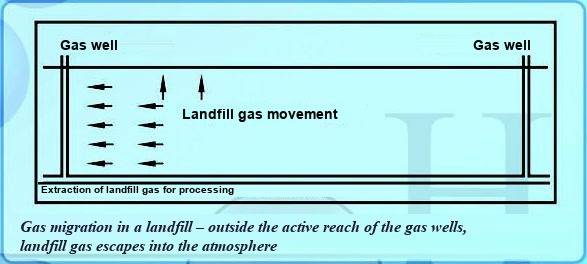
4. Methane from landfills – when organic matter in waste breaks down in a landfill without oxygen, microbes produce methane as well as other greenhouse gases. Landfill gas is roughly half methane and half carbon dioxide, and municipal solid waste landfills are the third-largest source of human-related methane emissions in the United States (about 14.4% in 2022, according to the US EPA).
5. Emissions from incineration – modern filters capture most harmful pollutants, but burning waste still releases greenhouse gases. Counting all the CO2 that leaves the chimney, a waste incinerator emits more CO2 per unit of electricity than a coal-fired power station, according to US EPA data, although only about a third of it comes from fossil-based materials such as plastics.

6. Plastic pollution in the oceans – single-use plastics and other waste that end up in the ocean damage marine ecosystems. Healthy oceans matter for the climate: the ocean absorbs about 30% of the CO2 released into the atmosphere, according to NOAA.

7. Logging – cutting down forests, especially old-growth forests and rainforests, releases more CO2 and means the lost trees can no longer absorb it. A mature tree is often estimated to absorb around 22 kg of CO2 a year, although the real figure varies widely with species, age and growing conditions (Arbor Day Foundation).

The impact of waste on climate change is far from negligible. If you have not yet adopted a zero waste lifestyle, here are some zero waste tips that help reduce your carbon footprint and fight climate change:
1. Buy clothes and other goods second-hand – you cut the carbon footprint of making and transporting a new item, including the electricity used to produce it.
2. Shop at a zero waste shop – a zero waste shop (also called a refill shop or bulk store) sells food and other everyday goods without packaging, so you cut the carbon footprint of producing packaging and of the extra transport of goods.
3. Grow your own food – you cut the carbon footprint of transport and packaging, and by using your own fertiliser from a wormery (worm composter) and avoiding pesticides, you can lower the CO2 emissions from growing it too.
4. Reduce your waste and sort it for recycling – less waste ends up in landfills. Together with wastewater, landfills account for about 20% of human-caused methane emissions, according to the UN Global Methane Assessment (2021).
5. Collect your purchases in person – this saves the extra packaging needed for shipping, and if you collect on foot, by bike or on a trip you are making anyway, it also cuts transport emissions.
6. Bring your own containers and bags when you shop in ordinary shops and at markets – you need less packaging, so less CO2 is released by extracting the raw materials for it and manufacturing it.
7. Avoid plastic bottles, straws, cutlery and other single-use plastics, and never leave them in rivers or on beaches – you help protect ocean life, and a healthy ocean can keep absorbing CO2 from the air.
🌿 Worth sharing? Let others know!
Enjoyed this article? Share this article or our page on Facebook, Instagram, or Threads. You’ll help us bring eco-tips and guides that save both money and the environment to many more people. Together, our impact will be much greater.
It takes literally just a few seconds, but it makes a huge difference for our planet. Thank you in advance for sharing:
 Facebook
 Instagram
 Threads
📩 Never miss a tip! Follow us
For the latest updates, we recommend joining our WhatsApp channel or following us on Pinterest. We promise to post at most one article every two days, so we won’t spam or disturb you.
⚠️ Important: On WhatsApp, click the bell icon to ensure you get notified.
 Join WhatsApp
 Follow Pinterest

Sources: GBCI, US EPA – landfill gas, US EPA – emissions from waste incineration, WMO – Global Methane Assessment, NOAA, Arbor Day Foundation