

In 2020 many saw Joe Biden as a transitional president who might serve only one term. During the campaign he called himself a “bridge” to a new generation of leaders, which many read as pointing to his running mate, Kamala Harris. Even so, he had ambitious environmental plans that could be carried out during his term in office. Whether the next president dismantled what Biden started or carried on putting nature first would depend on who succeeded him. The summary below is based on his campaign’s climate plan (archived).
Net-zero emissions by 2050 at the latest
On his first day in office, Biden would sign a series of new executive orders with unprecedented reach that go well beyond the Obama–Biden administration’s platform.
In his first year in office, he would ask Congress to pass legislation that would:
1) Establish an enforcement mechanism with milestone targets no later than the end of his first term in 2025.
2) Make a historic investment in clean energy and climate research and innovation.
3) Create incentives for the rapid deployment of clean energy innovations across the economy, especially in communities most affected by climate change.
By promising action on his first day and during his first year in office, Biden signalled that climate change needed urgent attention and that he intended to tackle the problem seriously.
Investing in infrastructure
Biden planned to ensure that buildings, water and transport systems, and energy infrastructure could withstand the impacts of climate change. Every dollar spent on rebuilding roads, bridges, buildings, the electricity grid and water infrastructure would go towards preventing and reducing the impact of a changing climate.

As president, Biden would use the convening power of government to improve the climate resilience of infrastructure. He would work with local universities and national laboratories to develop regional climate resilience plans and give communities access to vital scientific information, data, tools and training.
In practice, this would mainly mean protecting coastal towns and cities from rising sea levels and hurricanes, putting up structures that can withstand stronger winds, constructing low-energy buildings and the like.
Making sure clean energy jobs are well paid and plentiful
As of November 2020, more than three million Americans worked in the clean energy economy, according to the plan. Biden saw a major opportunity to revitalise the US energy sector, drive growth across the wider economy and reclaim the country’s position as the world’s clean energy leader and top exporter.
The US Bureau of Labor Statistics projected that between 2016 and 2026 solar photovoltaic installers and wind turbine service technicians would be the two fastest-growing occupations, growing by 105% and 96%.
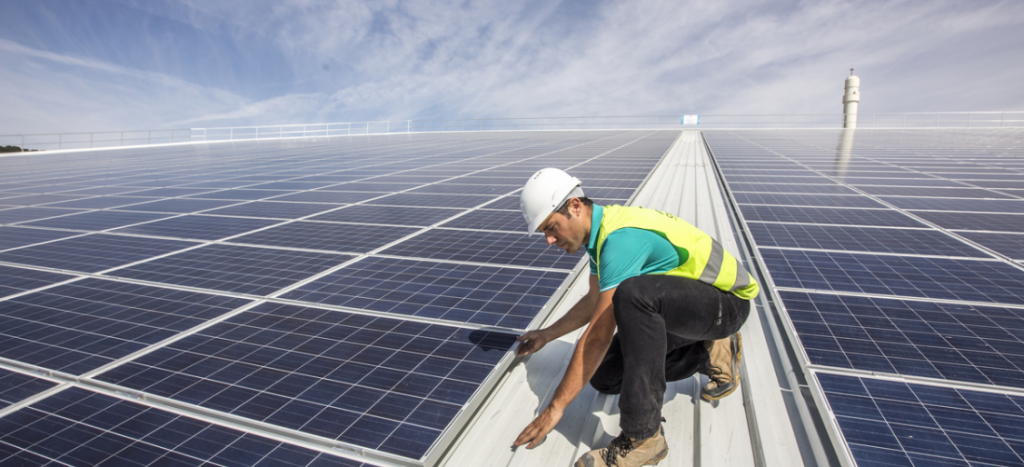
So there should be plenty of opportunities, especially in construction and in electric vehicle manufacturing. More jobs would come in research – including openings for students – as well as in agriculture and recycling.
Factories, government offices and other organisations would also need to cut their carbon footprints. New services would spring up to see them through the transition, employing still more people.
Rallying the rest of the world against climate change
Climate change is a global challenge that demands decisive action from every country. Biden would not only recommit the United States to the Paris Agreement but go much further. He would press every major economy to raise the ambition of its domestic climate targets, ensure those commitments are transparent and enforceable, and use America’s economic leverage to stop countries from cheating. He would also integrate climate change fully into foreign policy, national security strategy and trade.
In practice, Biden would seek to make trade cooperation conditional on countries meeting their climate commitments, convene new international climate summits and launch initiatives to combat global warming. One specific aim was to push other countries towards a worldwide end to fossil fuel subsidies.
Standing up to polluters who abuse their power
Biden planned to take action against fossil fuel companies and other polluters who put profit over people, knowingly harm the environment, poison the air, land and water, or conceal information about potential environmental and health risks.
He also wanted to ensure that communities across the country – from Flint, Michigan, to Harlan, Kentucky, to the New Hampshire seacoast – had access to clean, safe drinking water.
Biden pledged not to accept contributions from oil, gas and coal companies or their executives.

Another aim was to tackle the environmental damage that financially powerful corporations cause in particular regions. This would also mean holding to account public authorities that do too little to protect citizens.
Biden’s $5 trillion plan to reach net zero
The plan set out $1.7 trillion of federal investment over ten years, which was meant to draw in private, state and local investment for a total of more than $5 trillion. In July 2020 Biden raised the federal figure to $2 trillion over four years. He proposed paying for the federal investment by reversing the excesses of the Trump tax cuts for corporations, reducing incentives for tax havens, tax evasion and outsourcing, making corporations pay their fair share, closing other loopholes in the tax code that reward wealth rather than work, and ending subsidies for fossil fuels.
This investment could fund:
- A new Advanced Research Projects Agency on Climate (ARPA-C) focused on technologies to combat climate change, including the development and deployment of carbon capture and sequestration technology.
- A national programme offering a package of affordable, integrated energy efficiency retrofits for American homes.
- The cleanest, safest and fastest rail system in the world, for passengers and freight.
- Cutting the federal government’s carbon emissions through more efficient buildings, renewable energy and a cleaner vehicle fleet.
- Accelerating the rollout of electric vehicles (EVs). When the plan was drawn up, about one million plug-in electric vehicles had been sold in the United States. Biden would restore the full electric vehicle tax credit, target it at middle-class consumers and favour vehicles made in America.
- Planting trees to combat urban heat.
- Expanding solar and wind power and researching new nuclear technologies such as small modular reactors.
How much of Biden’s plan could be carried out would depend heavily on the balance of power in the Senate. A Democratic majority would make passing legislation much easier. As of 8 November 2020, Republicans and Democrats each held 48 of the Senate’s 100 seats. Biden’s best hope lay in Georgia, where both Senate seats were going to run-off elections in January 2021. The remaining seats, in North Carolina and Alaska, were expected to go to the Republicans.
One advantage for Biden was that if the Senate were split 50–50, the vice-president, who belongs to the party in the White House, would cast the deciding vote. From January 2021 that would be Vice-President-elect Kamala Harris, Biden’s running mate.
Update (2026): Democrats won both Georgia seats in January 2021, but under Biden’s successor, Donald Trump, the United States left the Paris Agreement again in January 2026.
As of 2019–2020, several US states and cities had already begun their own green transition within their existing powers:
- Governor Michelle Lujan Grisham committed to cutting statewide greenhouse gas emissions by at least 45% by 2030 (compared with 2005 levels); at the time, New Mexico was the third-largest oil-producing state in the US.
- Governor Jared Polis set a goal of 100% renewable electricity for Colorado by 2040 and signed an executive order to move the state towards zero-emission vehicle standards and wider use of electric vehicles.
- In 2019 Oregon lawmakers proposed a cap-and-trade bill that would have capped greenhouse gas emissions at about 52 million tonnes, modelled on California’s own cap-and-trade programme and on the Regional Greenhouse Gas Initiative (RGGI), formed at the time by nine north-eastern states (Connecticut, Delaware, Maine, Maryland, Massachusetts, New Hampshire, New York, Rhode Island and Vermont). The bill failed after Republican senators walked out of the state legislature.
- 29 states, three territories and Washington, DC had adopted renewable portfolio standards, which require a set share of the electricity sold by utilities to come from renewable sources.
- Cities have taken the lead too: many have set goals to cut emissions by 80% by 2050, and more than 400 mayors have committed to upholding the goals of the Paris Agreement. They are tackling emissions creatively, through measures such as an energy tax that cuts emissions (Boulder, Colorado), the electrification of public transport (Los Angeles) and a goal of powering all municipal operations with carbon-free electricity by the end of 2020 (Kansas City, Missouri).
Let’s hope, then, that Georgia elects Democratic senators so that the green revolution can begin. That would be a major step for the world. China has already started its own race: in September 2020 President Xi Jinping pledged that China would reach carbon neutrality before 2060 (see our article China pledges carbon neutrality by 2060). The United States must now act too. In this race everyone wins: milder consequences of climate change and hope of averting disaster.
🌿 Worth sharing? Let others know!
Enjoyed this article? Share this article or our page on Facebook, Instagram, or Threads. You’ll help us bring eco-tips and guides that save both money and the environment to many more people. Together, our impact will be much greater.
It takes literally just a few seconds, but it makes a huge difference for our planet. Thank you in advance for sharing:
 Facebook
 Instagram
 Threads
📩 Never miss a tip! Follow us
For the latest updates, we recommend joining our WhatsApp channel or following us on Pinterest. We promise to post at most one article every two days, so we won’t spam or disturb you.
⚠️ Important: On WhatsApp, click the bell icon to ensure you get notified.
 Join WhatsApp
 Follow Pinterest
Sources: joebiden.com (archived), nytimes.com