

China will strengthen its climate commitments and aim to achieve carbon neutrality by 2060. President Xi Jinping announced the pledge on 22 September 2020 during his speech to the UN General Assembly, Climate Home News reported.
The president’s announcement surprised both environmental campaigners and the wider public.
China, the world’s largest polluter, responsible for around 28% of global carbon dioxide emissions, says it will cut them to net zero within 40 years.
The pledge is particularly significant because China had never before made such an ambitious climate promise.

Shortly before, the European Union had committed billions of euros to a green stimulus package and moved to tighten its own climate targets for 2030.
Xi’s announcement therefore improves the chances that Europe and China, which together account for more than a third of global emissions, will cut their carbon emissions together.
Xi Jinping called on the world to work together and invest in a green recovery to lift the global economy out of the post-COVID slump.
“COVID-19 reminds us that we are living in an interconnected global village with a common stake,” says Xi Jinping.
“All countries are closely connected and we share a common future. No country can gain from others’ difficulties or maintain stability by taking advantage of others’ troubles.”
“This is why we should embrace the vision of a community with a shared future in which everyone is bound together,” he continues.
“We aim to have CO2 emissions peak before 2030 and achieve carbon neutrality before 2060.”
Until then, China had said only that its emissions would peak around 2030, and it had avoided committing to a long-term goal.

China’s carbon emissions continued to rise in 2018 and 2019, even as much of the world began moving away from fossil fuels.
Although the COVID-19 crisis cut the country’s emissions by about a quarter for several weeks in early 2020, by May they had climbed back above pre-crisis levels as coal-fired power stations and other heavy industry returned to full output.
John Murton, the UK’s climate ambassador for the COP26 climate talks in Glasgow, called it “a significant announcement” and said he looked forward to learning the details.
Jennifer Tollmann, a climate diplomacy policy adviser at the think tank E3G, called China’s new position “a huge economic shift”. She added that the European Union and China – the world’s two largest markets – were now both committed to cutting pollution. E3G analysts saw China’s decision as a success for the EU, which had long pressed Beijing for stronger climate action. A high-level EU–China dialogue was planned for November 2020 to discuss both sides’ long-term decarbonisation strategies and how each would strengthen its climate plan for 2030.
Why did China decide to act now?
The reason is global politics. Xi Jinping’s speech stood in sharp contrast to that of US President Donald Trump, which was broadcast shortly before it on the same day and blamed China for the world’s problems. Xi, by contrast, called for global cooperation and stressed all the good work China had done for the world.
It is probably no coincidence either that the announcement came just weeks before the US presidential election, at a time when terrible wildfires on the West Coast and a series of powerful storms in the south and east had pushed global warming up the agenda in opinion polls.
A global race for renewable energy?
China is due to present its 14th Five-Year Plan for 2021 to 2025. According to Bloomberg, it is expected to cut coal’s share of the energy mix from 57.5% in 2020 to 52% and to get 20% of primary energy from non-fossil sources.
That would mean renewables and nuclear power generating 42% of China’s electricity in 2025, up from 32% in 2020.
Richard Black, director of the Energy and Climate Intelligence Unit (ECIU), a UK non-profit organisation working on energy and climate change, said the pledge “looks like a very significant step forward”. He added: “China isn’t just the world’s biggest emitter but the biggest energy financier and biggest market.” Its decisions therefore play a major role in the global shift away from the fossil fuels that cause climate change.
Even more important is the wider context of Xi’s pledge: the falling cost of clean energy is transforming what countries can do to decarbonise their economies almost completely.
Renewable energy is already cheaper than energy from fossil fuels in many parts of the world and is likely to become cheaper still if China and the EU step up their investment in renewables over the coming years.
Notably, Xi’s 2060 pledge is unconditional: China will decarbonise whether or not other countries do the same.
It is a complete break with past climate negotiations, in which every country was afraid of bearing the cost of decarbonising its own economy while others did nothing.
Very soon, renewables are likely to be the cheapest option across much of the world – and therefore almost certainly the most profitable.
This means investors will not need to be pressured by environmental campaigners to do the right thing; money will motivate them.
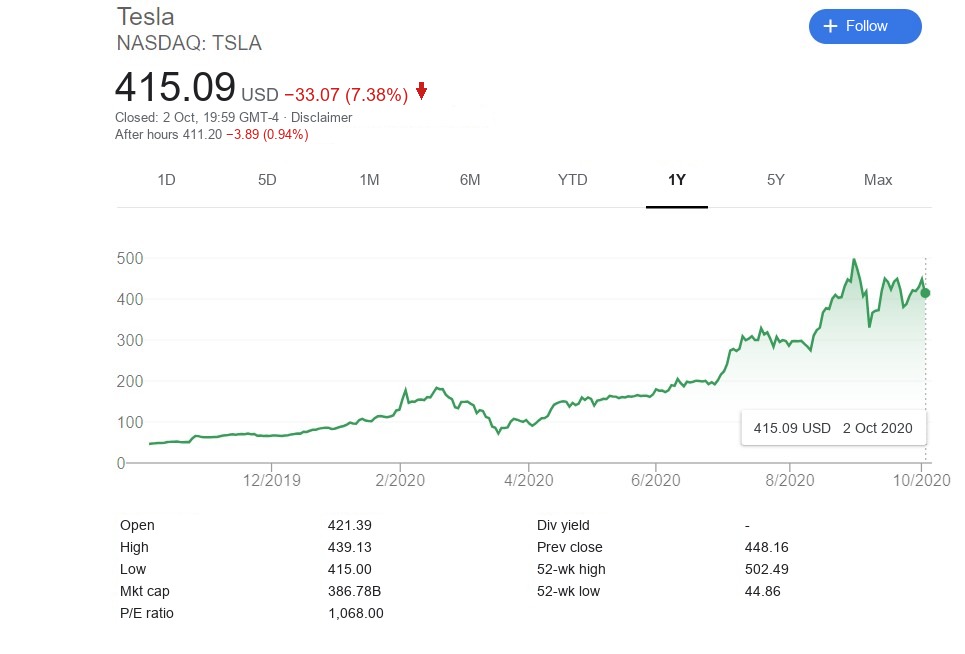
The shift in investors’ preferences has become clearer over the past decade. In 2020 alone, Tesla’s soaring share price made it the world’s most valuable car company.
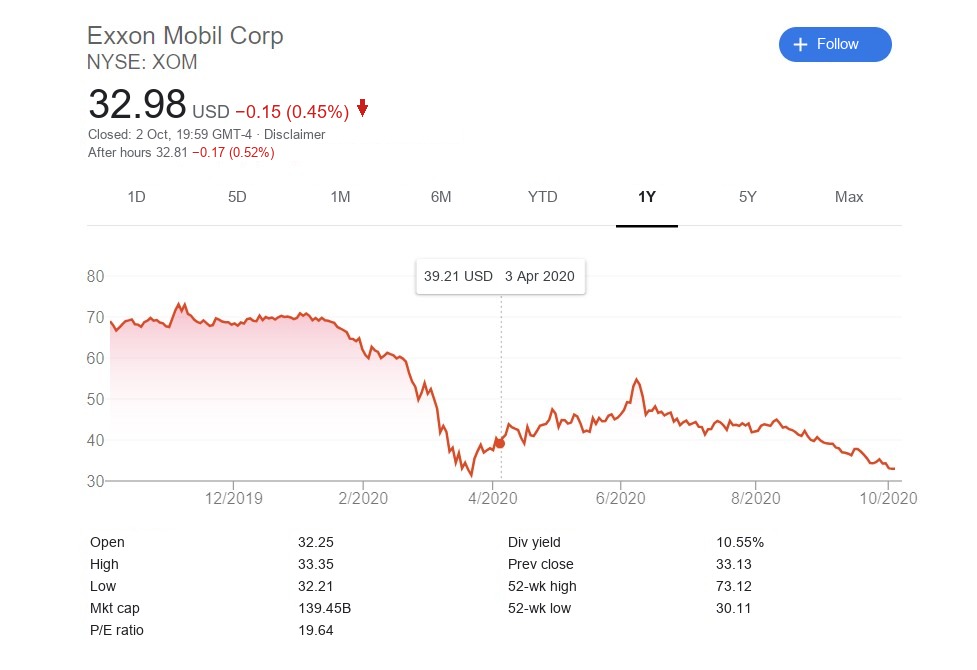
Meanwhile, the share price of the oil company ExxonMobil, once the most valuable company in the world, fell so far that in August 2020 it was removed from the Dow Jones Industrial Average, the index of 30 major US companies.
This brings us to the idea of a global race for renewable energy.
Countries and companies could soon commit fully to decarbonisation, because the profits to be made in this huge new market are already plain to see.
One more reason for optimism
The United States is the world’s largest economy and its second-largest emitter of greenhouse gases, so US cooperation is vital to any effort to tackle climate change. Donald Trump’s administration avoided commitments to cut carbon emissions and even played down or denied the problems linked to global warming.
His challenger, Joe Biden, has said he will take the US back into the Paris Agreement and has pledged a $2 trillion green energy recovery plan aimed at cutting emissions and tackling the impacts of climate change.
The world’s three largest economies, which together account for more than half of all emissions, would then all be committed to cutting them. Once they had made that commitment, other countries would eventually follow.
A great deal will depend on the US election.
Update (November 2026): Joe Biden won the 2020 election and the US rejoined the Paris Agreement in February 2021, but under Donald Trump’s second presidency it left the agreement again on 27 January 2026 (E&E News).
🌿 Worth sharing? Let others know!
Enjoyed this article? Share this article or our page on Facebook, Instagram, or Threads. You’ll help us bring eco-tips and guides that save both money and the environment to many more people. Together, our impact will be much greater.
It takes literally just a few seconds, but it makes a huge difference for our planet. Thank you in advance for sharing:
 Facebook
 Instagram
 Threads
📩 Never miss a tip! Follow us
For the latest updates, we recommend joining our WhatsApp channel or following us on Pinterest. We promise to post at most one article every two days, so we won’t spam or disturb you.
⚠️ Important: On WhatsApp, click the bell icon to ensure you get notified.
 Join WhatsApp
 Follow Pinterest
Sources: BBC, Climate Home News, ECIU, Carbon Brief, Statement by Xi Jinping (CSIS Interpret), statista.com.